Nunziata Jannetta 1905 – 2005
Nicola Jannetta’s story of her grandmother Nunziata touches on many aspects of Italian women’s experience in Scotland including the loss of her husband on the Arandora Star and her determination to carry on running the family business and bringing up her family.
My nonna lived with us and was a significant presence in my life, a driving force in our family, and an amazing role model. She had great strength, determination, resilience, a work ethic, love for her family, and an unshakable faith.
She was born Nunziata Visocchi on 30 January 1905 in Atina, the middle child of seven children. She came to Scotland as a teenager with her father and a couple of her siblings when many at that time were leaving Italy and going overseas in search of work and a better life for the family. Her father, however, couldn’t settle here. He didn’t like the climate, and he was homesick for his beloved Italy, so he took them back to Italy.
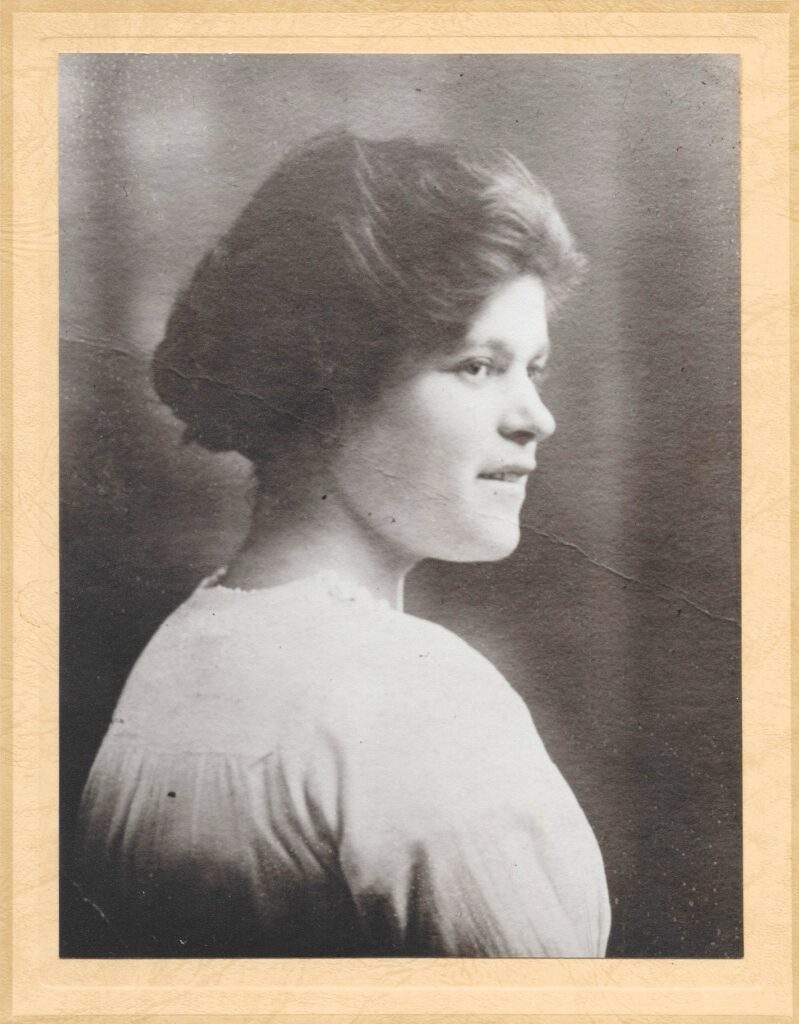
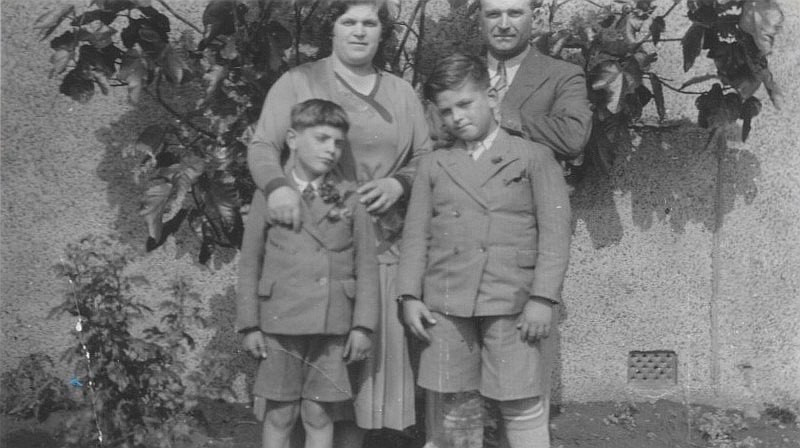
Nonna married Vincenzo Iannetta from Belmonte Castello on 6 January 1927, and shortly afterwards they moved to Scotland together with my nonno’s brother Sabatino and his wife, Vincenza. They opened a shop together at Aberhill, Methil. As they started to have children, Nunziata realised that the business would struggle to support the two families, and so she was the driving force who encouraged Vincenzo to leave the partnership with his brother so they could open a shop of their own. Sabatino and Vincenza remained at Aberhill, and Nunziata and Vincenzo moved firstly to Denbeath, where they worked until they had earned enough money to build a property in Methil at Methil Brae, a shop with a flat above it. They had two sons, my father Dante (born 26.03.28) and his brother Edmondo (born 02.04.30). Things were going well for them until war broke out in Europe, and Italy joined forces with Germany. Life was never to be the same again. Overnight, they went from being popular and respected members of the local community to being considered “the enemy”. After Churchill’s command to “collar the lot”, my grandfather, along with all the other local Italian men, was arrested and held in jail until they could be deported. My grandmother told me that when my grandfather was taken away, she told him they’d be back together soon, but he responded by telling her to look after their boys as he feared the next time they saw each other would be in paradise. This is what came to pass. He was one of the Italians on board the Arandora Star. While the men were to be deported, all the Italian women and children had to move 50 miles inland to avoid the risk of them being able to assist the enemy. My grandmother moved with her two boys to Strathyre, where they lived in one house alongside three other Italian families who had also had to move from the area. At the time the Arandora Star was torpedoed on 2 July 1940 my grandmother woke up screaming that something had happened to her husband. The other women in the house tried to calm her, saying she was just having a nightmare, but she said she knew in her heart that something terrible had happened. As one by one the other women received telegrams letting them know their husbands had survived, my grandmother was to receive no such telegram. Her brother, Sabatino, was among the survivors, and he was later able to tell her that he survived because he had been on deck at the time of the attack, but my grandfather had gone below deck to lie down as he had been suffering from sea sickness and therefore was unable to escape. Nunziata was heartbroken, but she devoted the rest of her life to keeping her promise to Vincenzo to look after their boys (aged ten and twelve at the time she was widowed). When they returned to Methil, she was told that she could not reopen the business. She was, however, popular and well-liked by her neighbours and customers. With their support and encouragement, they went door to door to petition all the houses in the neighbourhood, asking them to sign a petition to allow her to reopen her business. Together, they collected over a hundred signatures and were given permission to reopen. The fear of something like that potentially happening again led to my grandmother naturalising and becoming a British citizen. She believed this was in the best interests of her sons and would give them more security, although in her heart, she was always Italian. All through her very long life, she frequently would tell us how things were done in Italy— and was still doing this even when she had lived many more years in Scotland than she had ever lived in Italy. She was also fond of telling me, if I complained that work was tiring, that work here was easy because all her life she’d been used to working in the fields, when, relatively speaking, it had been a very short period of her life when she’d actually done this kind of work.

Her sons and the family business became her life. Her two boys, Dante and Edmondo, were expected to help out in the shop after school and at weekends. My dad and my uncle told stories of her tying them by the ankles to the counter with a piece of string only long enough to stretch from one end of the counter to the other. This was after they had sneaked off to play football one Saturday afternoon instead of helping in the shop. Dad was in a football team and would have liked to play professionally, but he ended up losing out on that opportunity as he had to miss matches or training to work in the shop. He also would have liked to stay on at school and potentially train to be a teacher, but both boys had to leave school at the earliest opportunity to go and work in the shop. There was no question of pursuing a career outside of the family business. Nonna’s will won out. She believed in making sacrifices for the good of your family and that you should just offer it up as a penance. (If she had her way, I believe this would have applied to my sister, Nadia, and me too, but for some reason, she decided not to interfere with my parents’ decision, and my parents were keen that we benefit from a good education and that we be allowed to pursue a career of our own choice.) She had, however, instilled her own sense of family loyalty and family duty into her two sons. She had devoted her life to working hard for them, and they recognised this and felt the same sense of family duty. Perhaps because of the devastating loss she had experienced as a young woman, she had an overwhelming desire to keep the family together. Even after my dad married, she encouraged him to bring his wife to live in the family home. While my mum had hopes of them moving out and getting a house of their own, Nonna’s will won through, and an extension was built onto the house to make more space for the growing family after my sister and I were born. This was also an opportunity to expand the business, adding a café onto the confectioner and fish and chip shop. My mum didn’t actually get her own house until after she and Dad had retired, and the family house and shop were sold. Nonna continued to work in the shop until she was 90 years old. As her legs grew tired, but she was still determined to continue working in the shop, I can remember seeing her going up and down the stairs by sitting down and moving up or down one step at a time, a clear sign it was time to install a stair lift. My grandmother had an incredible work ethic. Other than a holiday to Italy every other summer, I can barely remember her going anywhere else other than to church and one time she went on a church pilgrimage to Lourdes. The shop was open every day, only closing for a half day on a Wednesday. The only time we ever had a whole day closure was on Christmas Day and New Year’s Day (and the day of my sister’s wedding— but the wedding had to be on a Wednesday so that we only had half a day extra closure!). The shop was open from early morning till late at night (whenever the last person was out of the local pub and had been in for their fish and chips). You never turned a customer away. Even if that meant cooking more fish and chips if someone arrived just as you were about to lock the door. It even meant answering the house door on our afternoon closure or Christmas holiday and running downstairs to the shop to get whatever the customer was asking for. The shop couldn’t be closed for family holidays either, so we alternated in taking family holidays— one summer my nonna and uncle would go to Italy for a few months’ holiday, and the next year it would be the turn of my mum and dad and my sister and me (our holiday always shorter than theirs as we had to be back for school term starting).
Nonna encouraged us all to work hard to earn money, but she certainly didn’t encourage us to spend it. You were encouraged to save your money “for a rainy day”. She would have two outfits, which she rotated and which she would darn and mend and only discard when they were falling apart and couldn’t be mended anymore. Even then, she would cut them up and use them as cleaning cloths. She didn’t believe in wasting anything. She was disapproving of my mother and my sister and me when she would see us returning from shopping trips laden with carrier bags full of clothes and shoes. We usually had to sneak these in via the back door and take them straight to our rooms to avoid Nonna or Dad (who had inherited her thriftiness) seeing them.
Other than working in the shop, she spent most of her time praying. She would go for a siesta every afternoon, and before that, she would kneel at the side of her bed and say the rosary. She also had an Italian prayer book, which she would read from cover to cover every day. It was stuffed full of prayer cards, and the pages had all come loose, so she used to hold it all together with elastic bands. Often, her sister-in-law, Zia Vincenza, would visit Nonna in the afternoon, and she would go into her bedroom and sit in the chair at the side of her bed, and they would chat for ages, moving between English and Italian within their conversations as if they were one and the same language.
For entertainment, she loved to watch the wrestling on a Saturday afternoon— that was the only time she insisted on getting off from the shop. She could be heard throughout the whole house cackling with laughter or cheering or booing and hissing as she watched grown men fling each other around the ring and jump on each other.
She loved spending time with the family. My sister and I loved staying home with her and our uncle on a Wednesday afternoon if our parents went out on their own. We were always allowed to choose a box of chocolates from the shop to bring upstairs and enjoy later when we watched tv together. First,though, we would help her roll out the pasta or the gnocchi she would make for our dinner. Whenever Nonna made homemade pasta, the entire kitchen and everyone in it would be covered in flour, which often seemed impossible to get rid of completely.
She didn’t go out herself very often but loved it when people came to visit, and she wouldn’t let them leave without feeding them first.
Nonna had to learn English, of course, because she had to be able to interact with the people coming into the shop. However, her English was a heavily accented form of broken Scots with the odd Italian word or phrase thrown in for good measure. I had grown up listening to this, so to me, it was normal; however, I realised by the look of confusion on some of my friends’ faces when they met her for the first time that it wasn’t so easy for everyone to understand. When she spoke, she would often just throw in an Italian word if she didn’t know the English word. When I was on holiday in Italy with her, I realised she did the same when speaking Italian – she’d just throw in an English word where she couldn’t think of the Italian word.
Nonna had more than her fair share of heartache in her long life. She lived to be 100 and indeed outlived all of her siblings, her husband, and both of her sons. Her youngest son, my uncle Edmond, dropped dead behind the shop counter at the age of 52 as a result of a brain haemorrhage. She then saw her other son, my dad, develop Alzheimer’s in later life, and he passed away a year before she did. She spent her last couple of years in a care home in Leven -her own decision as she was struggling to walk anymore and refused to put the burden of care on my mother, who was already coping with Dad’s advancing Alzheimer’s. The care home was situated on Leven beach, and Nonna opted for a smaller room at the back of the building and turned down the offer of a much nicer, bigger room at the front with the sea view. I’m sure that was because she could not face having to look out at the sea view every day as a constant reminder that the sea had taken her beloved husband all these years ago. (She did, however, still like to look out the window to keep an eye on how business was going for Doriano’s ice cream van.)
Her body may have started to let her down as she lost her mobility, but mentally she remained sharp as a tack. She had an amazing ability to remember people and events from many years previous with exact precision about dates, etc. She would look at an old photograph and be able to identify every person in it and tell you everything about them, when they were born, the date they married (including what day of the week that was, what the weather was like, what you were given to eat at the wedding, everyone else who was there),everything about their families and where they were living, and what they did. When she did this, my sister and I would roll our eyes and say, “Here she goes again,” but now I wish with all my heart that we had paid more attention. We have now inherited that box of old photographs, but sadly many of the people in them we cannot identify.
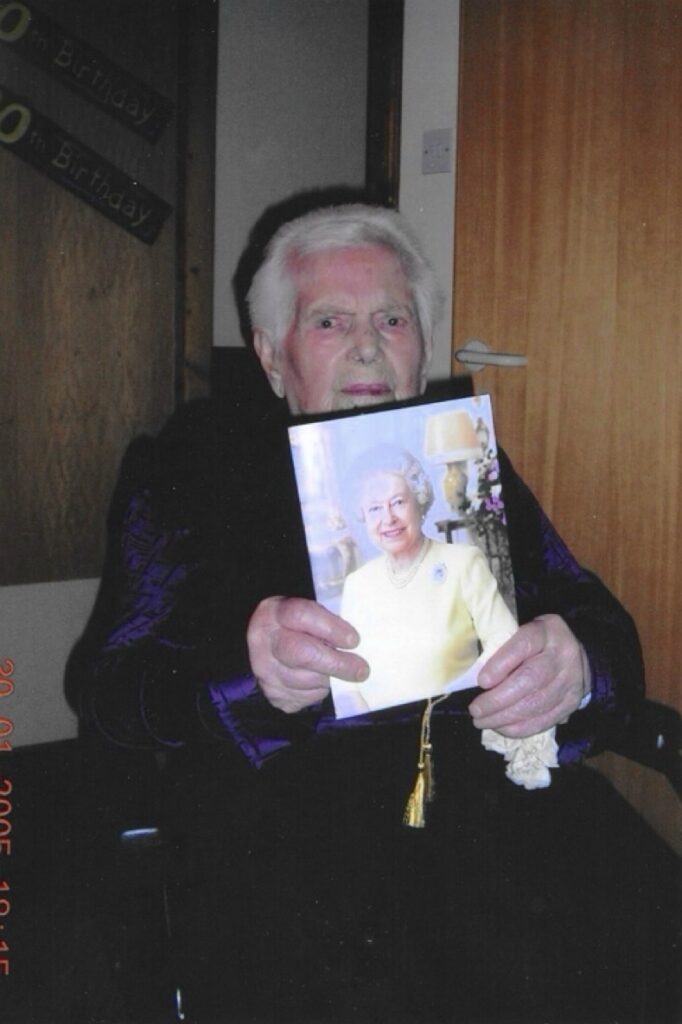
Nonna celebrated her 100th birthday on 30 January 2005 with a little party in the care home for family and friends and a presentation from the local councillor. There was also an article published in the local newspaper entitled “Nunziata’s still chipper after 100 years!” She was very proud to receive her birthday card from the Queen. I think though she had just been hanging on for us to see her reach 100 and get her card from the Queen – we’d always been sure she would. She was tired and ready to go and be reunited with her husband and her sons. She died peacefully with us at her bedside a couple of months later on 6 April 2005. I still think about her every day and remember her with love and pride.
Nicola Jannetta